Paul Butler · 13 October 2026
Weather Shifts Prompt Coordinated Responses Across Beluno's Agriculture, Education, and Infrastructure Projects
Weather patterns across the Beluno valley have undergone measurable changes in recent seasons, and local sectors now coordinate adjustments to maintain stability in food production, schooling operations, and transport networks. Data collected through regional monitoring stations indicate shifts in rainfall distribution and temperature averages that began intensifying around 2024, with further documentation emerging by October 2026.
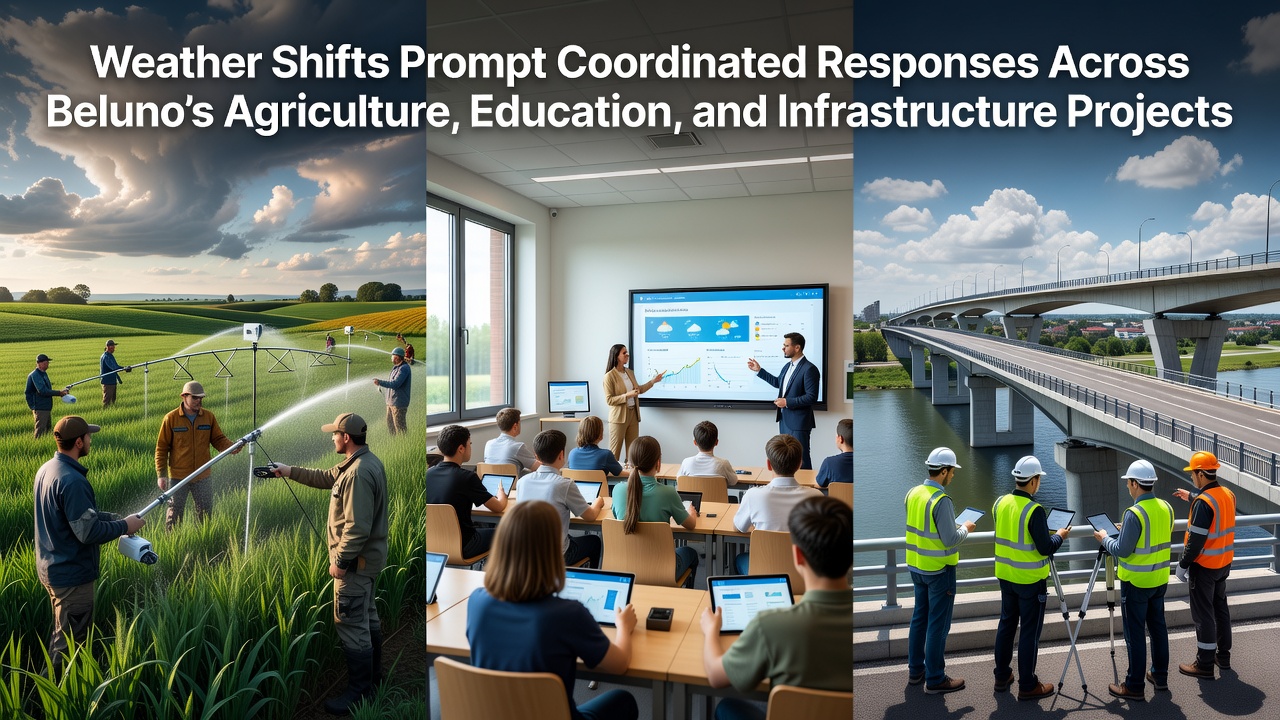
Agricultural operations have adapted through revised planting schedules and irrigation upgrades. Farmers report earlier spring thaws followed by irregular summer precipitation, which has prompted the installation of drip systems on approximately 35 percent of valley cropland according to records from the Beluno Agricultural Cooperative. These modifications allow continued yields of staple crops such as barley and potatoes despite the altered moisture levels.
Impacts on Farming Cycles and Harvest Timing
Harvest windows have narrowed in several zones, leading growers to introduce drought-resistant varieties supplied by regional seed banks. One study released by the Alpine Research Institute tracked a 12-day advance in the typical barley maturation period compared with figures from 2015, and similar trends appear in vegetable plots where extended dry spells require supplemental watering. Coordination between the cooperative and local water authorities has produced shared reservoir management protocols that prioritize agricultural needs during peak demand months.
Education facilities face parallel pressures from the same weather variables. School administrators have adjusted outdoor activity calendars to account for increased instances of heavy rain events that disrupt recess periods and field trips. Indoor learning spaces now incorporate improved ventilation systems funded through joint grants issued in late 2025, which help maintain comfortable conditions when temperatures climb above seasonal norms.
School Schedule Adjustments and Facility Upgrades
Bus routes serving rural campuses have been rerouted to avoid low-lying roads prone to seasonal flooding, a change documented in the Beluno Education Board annual report covering the 2025-2026 academic year. Teachers receive updated training modules on recognizing heat-related student fatigue, and several institutions have introduced flexible start times during the warmest weeks of autumn. These steps emerged after consultations with meteorologists who provided localized forecasts extending through October 2026.
Infrastructure projects have accelerated to address vulnerabilities exposed by intensified precipitation. Road maintenance crews completed drainage enhancements on 48 kilometers of secondary routes during the summer of 2026, while bridge inspections scheduled for October identified additional reinforcement needs at three key crossings. The Beluno Public Works Department coordinates these efforts with agricultural representatives to minimize disruption during harvest periods.
Infrastructure Resilience Measures Underway
Power grid operators have buried select overhead lines in flood-risk corridors after storm damage records showed repeated outages in 2024 and 2025. European Environment Agency climate summaries note that such proactive burial reduces service interruptions by up to 60 percent in comparable mountain valleys. Utility planning meetings now include representatives from farming cooperatives and school districts to align repair windows with academic calendars and crop cycles.
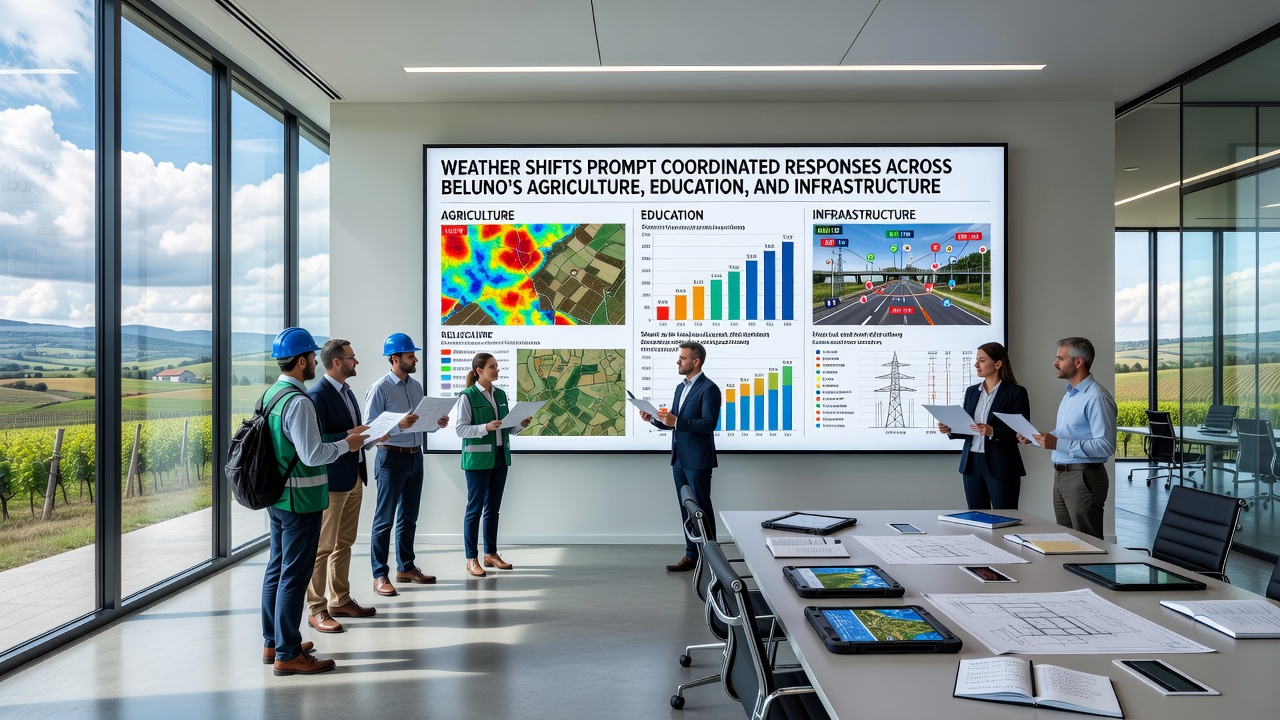
Joint task forces meet monthly to review weather forecasts and allocate resources across sectors. These groups compile data from ground sensors and satellite imagery, then distribute prioritized action lists that cover everything from seed procurement to classroom maintenance. The approach draws on models developed by the International Centre for Integrated Mountain Development, which emphasize cross-sector communication to limit cumulative losses during variable weather years.
Cross-Sector Coordination Mechanisms
Funding streams have merged through regional development programs that require demonstrated collaboration between agriculture, education, and public works. Applications submitted in early 2026 secured support for combined projects such as solar-powered irrigation pumps located near school campuses that double as educational demonstration sites. This integration reduces duplication of effort while meeting multiple community objectives simultaneously.
Conclusion
Observers note that the coordinated framework continues to evolve as new weather data arrives each season. Records maintained by valley authorities show incremental improvements in response times and resource allocation since the formalization of joint protocols in 2025. Continued monitoring through October 2026 and beyond will determine whether these measures sustain productivity and service continuity under ongoing climatic variation.