Paul Jenkins · 27 October 2026
Early Crop Cycles and Trail Expansions Reshape Community Rhythms in Valley Areas
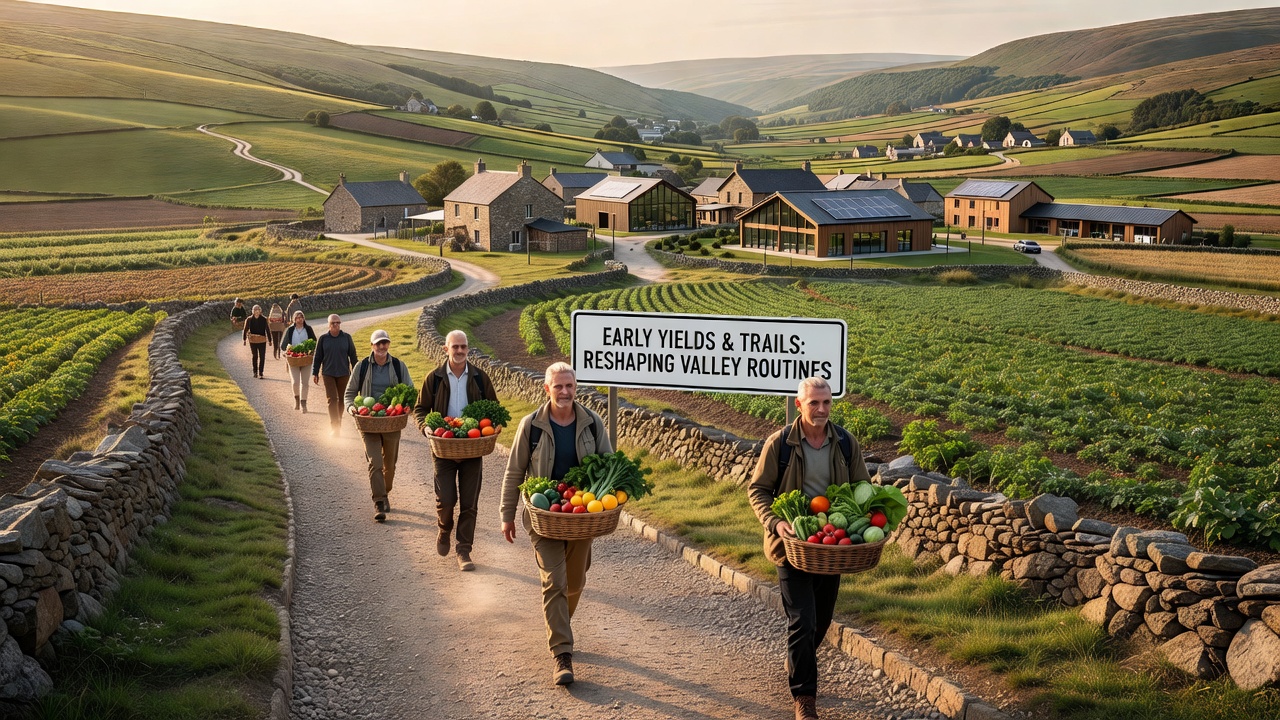
Valley communities have seen harvest periods move forward by several weeks in recent seasons, and observers note that this shift combines with expanded trail networks to alter how residents schedule work, travel, and leisure. Data from agricultural monitoring programs show that warmer spring conditions have accelerated maturation rates for staple crops such as wheat and root vegetables, prompting earlier market openings and adjusted school calendars in multiple districts. Meanwhile, trail construction projects completed through 2025 have linked previously isolated hamlets, creating direct routes that cut travel times between farms and town centers by up to 30 percent according to regional transport logs.
Adjustments in Daily Agricultural Workflows
Farmers now begin equipment checks and irrigation cycles at dawn rather than mid-morning, because early yields require prompt collection to maintain quality before midday heat sets in. Studies compiled by the Australian Bureau of Agricultural and Resource Economics and Sciences indicate that similar timing changes in comparable temperate zones have led to a 15 percent increase in labor shifts starting before 6 a.m. Local cooperatives report that packing facilities operate on split schedules, with morning crews handling initial loads and afternoon teams managing storage and transport to regional hubs. This pattern has also influenced family routines, as children accompany parents to fields earlier, then return for adjusted school start times that begin 45 minutes sooner than in prior years.
Trail Networks and Movement Patterns
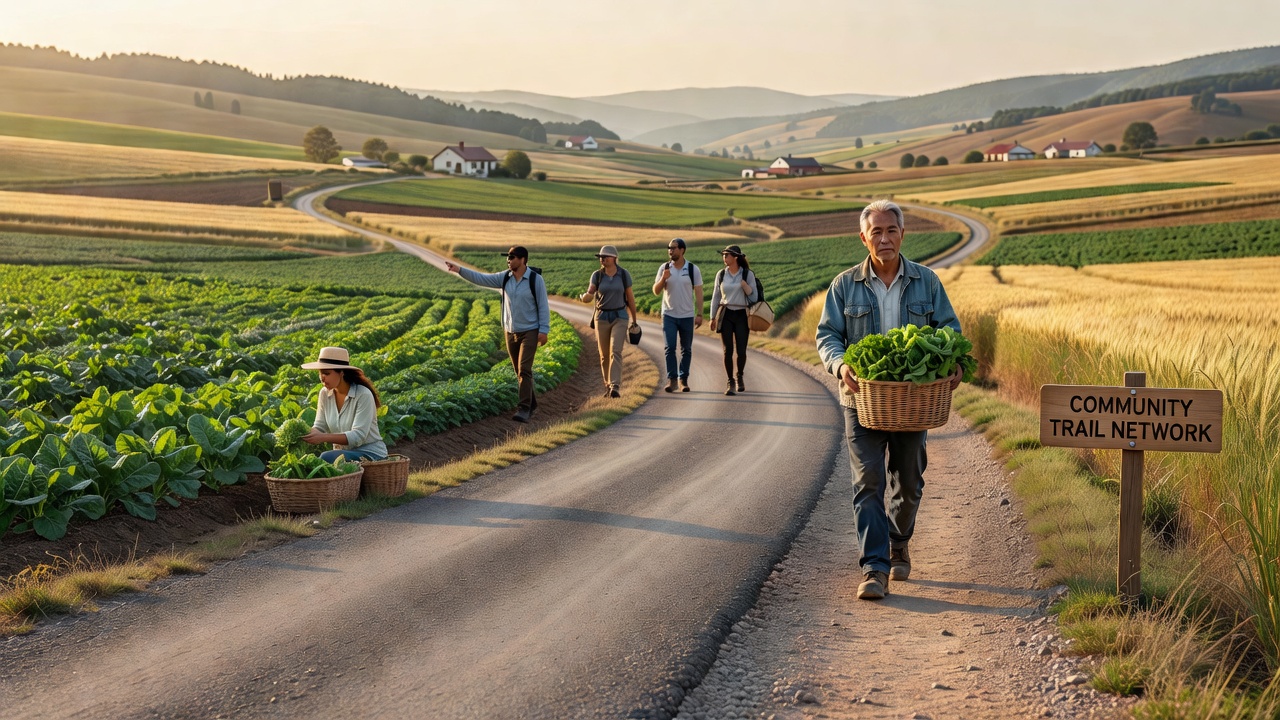
Trail additions have introduced paved and gravel paths that run parallel to older roads, allowing cyclists and pedestrians to bypass narrow lanes during peak harvest traffic. Government records from Transport Canada highlight how comparable infrastructure expansions in rural corridors reduced vehicle dependency by encouraging shared-use routes for both commuting and recreation. In valley zones, these paths now connect community gardens directly to processing centers, so residents transport smaller loads by handcart or bicycle rather than waiting for larger vehicle convoys. Evening strolls have grown common as well, since lit sections of the new trails remain accessible after sunset, extending social interactions beyond traditional indoor gatherings.
Impacts on Education and Local Services
School districts have realigned bus routes to follow trail-adjacent roads, shortening pickup times while avoiding congested harvest lanes. Attendance data collected through October 2026 shows improved punctuality in districts where families use trail shortcuts to reach campuses. Health clinics report a rise in walk-in visits during midday hours, because trail access allows quicker travel from outlying farms without relying on limited public transport schedules. Service providers have therefore extended operating windows into early afternoon slots to accommodate these new arrival patterns.
Market and Supply Chain Responses
Market days have shifted from weekend clusters to midweek events that align with peak freshness windows for early crops. Wholesale buyers coordinate with growers through digital platforms that update availability in real time, reducing storage needs at distribution points. Figures released by the Food and Agriculture Organization of the United Nations reveal that regions experiencing similar yield accelerations have seen a measurable drop in post-harvest losses when logistics adapt promptly. Valley traders now schedule refrigerated truck departures in the late morning rather than overnight, because trail shortcuts allow faster loading and departure from collection points.
Community Recreation and Social Timing
Recreational use of trails has increased during shoulder hours, with groups organizing group walks before work or after dinner to take advantage of cooler temperatures and reduced field activity. Local councils have installed benches and water stations at regular intervals, supporting longer outings without additional vehicle support. Participation logs from community centers indicate that organized events such as harvest festivals now occur on weekday evenings, drawing larger crowds who arrive via trail connections instead of driving longer distances on main roads.
Conclusion
Coordinated monitoring by agricultural and transport agencies continues to track how these overlapping changes affect energy use, local economies, and resident well-being across valley communities. Records through late 2026 document measurable adjustments in daily schedules that reflect both the earlier crop cycles and the practical benefits of expanded trail access.